
⚡ QUICK ANSWER: Which Chamber Actually Works?
Hard shell hyperbaric chambers (2.0–3.0 ATA, 100% medical-grade O₂) are clinically proven and FDA-approved to treat 14 specific medical conditions including diabetic foot ulcers, radiation injury, and decompression sickness. Soft shell chambers (1.3–1.5 ATA, ambient air) are FDA-cleared only for altitude sickness and are suitable for general wellness — not medical treatment. If you have a clinical diagnosis requiring HBOT, only a hard shell chamber meets the UHMS standard.
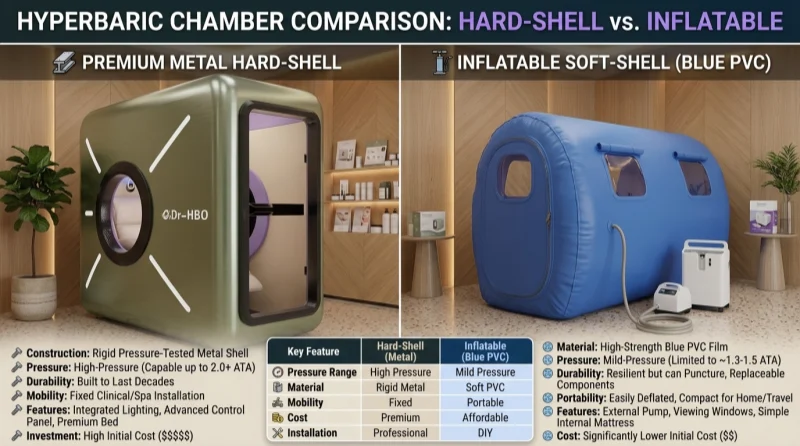
Figure 1: Pressure and oxygen delivery comparison — hard shell chambers operate at 2.0–3.0 ATA with 100% medical-grade O₂; soft shell chambers reach only 1.3–1.5 ATA with ambient air.
01. The Core Difference: Pressure and Oxygen Delivery
The single most important factor in any hyperbaric chamber is pressure — measured in Atmospheres Absolute (ATA). Everything else — oxygen concentration, clinical outcomes, FDA approvals, and insurance coverage — flows directly from this one variable.
The UHMS (Undersea and Hyperbaric Medical Society) defines clinical HBOT as breathing near 100% oxygen at a minimum of 1.4 ATA. For most approved medical indications, effective treatment requires 2.0–3.0 ATA. This is the threshold that separates medical-grade therapy from wellness-grade supplementation.
| Specification | Hard Shell Chamber | Soft Shell Chamber |
|---|---|---|
| Pressure Range | 2.0 – 3.0 ATA | 1.3 – 1.5 ATA |
| Oxygen Delivery | 100% Medical-Grade O₂ | 21–24% Ambient Air |
| UHMS Definition of HBOT | ✅ YES — Meets Standard | ❌ NO — Below Threshold |
| FDA-Approved Indications | ✅ 14 Medical Conditions | ❌ Altitude Sickness Only |
| Medicare / Insurance | ✅ Covered (Approved Uses) | ❌ Not Covered |
| Plasma O₂ Saturation | Up to 20× Baseline | Marginal Increase |
| Clinical Evidence | Extensive Peer-Reviewed | Limited for Medical Use |
| Chamber Structure | Rigid Steel or Acrylic | Inflatable Fabric / PVC |
| Typical Cost | $50,000 – $250,000+ | $5,000 – $25,000 |
| Session Cost (Clinic) | $150 – $600 | $50 – $100 |
02. Why Pressure Is Everything: The Physics Explained
The reason pressure matters so much comes down to Henry’s Law: the amount of gas dissolved in a liquid is directly proportional to the partial pressure above it. At sea level, hemoglobin carries oxygen at near-maximum capacity (~98% saturation) — no matter how much pure oxygen you breathe, you cannot significantly increase the oxygen your blood delivers through hemoglobin alone.
But inside a hard shell chamber at 2.0–3.0 ATA, oxygen bypasses hemoglobin entirely and dissolves directly into the blood plasma. Clinical data shows this raises plasma-dissolved oxygen by up to 20 times over baseline, driving therapeutic oxygen into tissues where red blood cells cannot reach — including ischemic wounds, infected bone, and radiation-damaged tissue.
What Happens at 1.3 ATA (Soft Shell)?
At 1.3 ATA — the operating ceiling of most soft shell chambers — the partial pressure increase is modest. Using ambient air (21% oxygen) rather than medical-grade 100% oxygen compounds the limitation. The result is a small, measurable increase in tissue oxygenation that may support general recovery and wellness, but is physiologically insufficient to reverse the deep-tissue hypoxia underlying conditions like diabetic foot ulcers or osteomyelitis.
What Happens at 2.4 ATA (Hard Shell)?
At 2.4 ATA — the standard clinical pressure for wound care — 100% oxygen is forced into plasma at supraphysiological concentrations. This triggers the Hyperoxic-Hypoxic Paradox: the body detects the oxygen fluctuation between sessions and activates HIF-1α, VEGF-driven angiogenesis, stem cell mobilization (up to 8-fold increase), and MMP-9 downregulation — all essential mechanisms for wound closure, bone healing, and tissue regeneration. These cascades simply cannot be triggered at 1.3 ATA.
⚠️ The 1.3 ATA vs 2.4 ATA Gap Is Not a Difference in Degree — It Is a Difference in Kind
A soft shell chamber at 1.3 ATA with ambient air cannot produce the physiological cascades that clinical HBOT at 2.4 ATA triggers. The gap between these two systems is not about comfort or convenience — it is a fundamental biological threshold. Facilities or marketers claiming soft shell chambers provide ‘mild HBOT’ benefits equivalent to clinical HBOT are not supported by peer-reviewed evidence.
03. Clinical Outcomes: What the Evidence Shows
The clinical evidence for hard shell HBOT is built on decades of peer-reviewed research and supported by major institutions including the UHMS, the FDA, and research hubs at Shamir Medical Center, UCLA Health, and Johns Hopkins Medicine. The evidence for soft shell chambers at wellness pressures is largely anecdotal or limited to minor subjective wellness improvements.
| Condition | Hard Shell (2.0–3.0 ATA) | Soft Shell (1.3–1.5 ATA) | Evidence Level |
|---|---|---|---|
| Diabetic Foot Ulcers | ✅ 30–40 sessions, proven | ❌ Insufficient pressure | Grade A — FDA Approved |
| Radiation Tissue Injury | ✅ Marx Protocol, established | ❌ Not indicated | Grade A — FDA Approved |
| Carbon Monoxide Poisoning | ✅ Emergency standard of care | ❌ Contraindicated | Grade A — FDA Approved |
| Decompression Sickness | ✅ First-line treatment | ❌ Inadequate pressure | Grade A — FDA Approved |
| Chronic Osteomyelitis | ✅ 40–60 sessions, refractory | ❌ No clinical evidence | Grade A — FDA Approved |
| TBI / Post-Concussion | ✅ Emerging (off-label) | ⚠️ Insufficient ATA | Grade B — Research Phase |
| Long COVID Recovery | ✅ RCT evidence (off-label) | ⚠️ Anecdotal only | Grade B — Research Phase |
| General Wellness / Fatigue | ✅ Effective but off-label | ✅ Mild support, wellness | Grade C — Consumer Use |
| Sports Recovery | ✅ Effective at clinical ATA | ⚠️ Subjective, limited data | Grade C — Consumer Use |
| Altitude Sickness | ✅ Highly effective | ✅ FDA Cleared | Grade A (soft = approved) |
04. Inside Hard Shell Chambers: Monoplace vs Multiplace
Within the hard shell category, there are two primary designs. Understanding the difference is essential for clinic operators selecting equipment.
| Feature | Monoplace Chamber | Multiplace Chamber |
|---|---|---|
| Capacity | 1 patient | 2–24+ patients + attendant |
| Pressure | 1.5–3.0 ATA | Up to 6.0 ATA |
| O₂ Method | 100% O₂ environment (no mask) | Air chamber + O₂ mask/hood |
| Medical Support | External monitoring only | In-chamber attendant possible |
| Best For | Outpatient clinics, wound care | Hospitals, trauma, high volume |
| Cost | $50,000–$150,000 | $250,000+ |
| Footprint | Compact (1,500–3,000 lbs) | Large (11,000+ lbs) |
| Notable Models | Sechrist 3200, Perry SIGMA 40 | Fink Engineering suites |
05. Soft Shell Chambers: What They Can and Cannot Do
Soft shell chambers — also marketed as mild HBOT (mHBOT), portable hyperbaric chambers, or home hyperbaric systems — serve a legitimate market. The key is understanding what that market is, and is not.
What Soft Shell Chambers Are Good For
- General wellness supplementation and recovery support
- Altitude sickness prevention and treatment (the only FDA-cleared use)
- Athletic recovery: mild reduction in inflammation and subjective fatigue after training
- Travel and portability: lightweight, deployable in hotel rooms or gyms
- Budget-accessible entry to hyperbaric environments ($5,000–$25,000)
- Wellness spas and longevity centers offering supplementary services
What Soft Shell Chambers Cannot Do
- Treat diabetic foot ulcers, radiation injury, osteomyelitis, or any of the 14 FDA-approved indications
- Qualify for Medicare or private insurance reimbursement for medical conditions
- Deliver the plasma oxygen saturation required for angiogenesis and stem cell mobilization at therapeutic levels
- Replace a physician-supervised clinical HBOT program for patients with serious diagnoses
- Be marketed for medical treatment claims without FDA-cleared evidence
🔴 Regulatory Warning
The FDA has issued consumer alerts warning that soft shell (hyperbaric) chambers are cleared only for acute mountain sickness. Marketing these chambers for wound healing, autism, stroke recovery, cancer treatment, or anti-aging is a regulatory violation. Patients should be cautious of any provider making medical treatment claims for soft shell equipment.
06. Which Chamber Should You Buy? Decision Guide
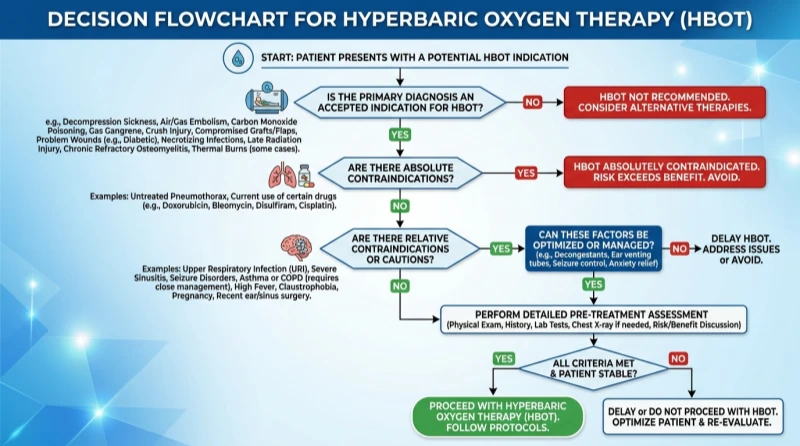
Figure 2: Chamber selection decision guide — your medical situation, budget, and intended use determine which chamber type is appropriate for your needs.
🏥 Choose Hard Shell If…
- You have an FDA-approved condition
- You need insurance / Medicare coverage
- You require 2.0+ ATA clinical pressure
- You are treating wounds, bone infections, or radiation injury
- You operate or plan to open a clinic
🏠 Choose Soft Shell If…
- You want general wellness or recovery support
- You travel frequently and need portability
- You are managing altitude sickness or minor fatigue
- Your budget is under $25,000
- You do NOT have a clinical diagnosis requiring HBOT
07. Cost Comparison: Buying, Operating, and Break-Even
| Cost Factor | Hard Shell (Clinical) | Soft Shell (Home/Wellness) |
|---|---|---|
| Equipment Purchase | $50,000–$250,000+ | $5,000–$25,000 |
| Per-Session Clinic Cost | $150–$600 (clinical) | $50–$100 (wellness) |
| Insurance Coverage | ✅ Yes (14 indications) | ❌ No |
| 20% Medicare Co-Pay | Applies to approved uses | N/A — Not Covered |
| Break-Even (Home Buy) | ~45 sessions @ $450/ea | ~25 sessions @ $80/ea |
| Operating Costs | Higher: O₂, certification | Lower: minimal overhead |
| Depreciation Period | 10–15 years (10,000+ cycles) | 5–10 years (fabric wear) |
💡 The Ownership Break-Even: A Case for Hard Shell Acquisition
For patients requiring 40+ sessions for chronic conditions such as TBI recovery, Long COVID, or osteomyelitis — where clinical sessions cost $450 each — purchasing a hard shell chamber at $19,999–$50,000 reaches financial break-even at 45–110 sessions. For clinic operators, a single monoplace chamber generating 4 sessions per day at $250 per session produces $260,000 in annual revenue, recovering equipment cost within one year. The ROI case for hard shell chambers is strongest for high-frequency, long-duration treatment programs.
08. Who Buys Which Chamber? Buyer Personas
| Buyer Type | Recommended Chamber | Primary Reason |
|---|---|---|
| Hospital / Wound Care Center | Multiplace or Monoplace Hard Shell | Medicare reimbursement, 14 indications |
| Outpatient Clinic / Private HBOT | Monoplace Hard Shell (2.0–3.0 ATA) | Patient volume, insurance billing |
| Longevity / TBI Recovery Center | Hard Shell (2.0+ ATA) | Neuroplasticity protocols, clinical credibility |
| Wellness Spa / Fitness Studio | Soft Shell or Entry Hard Shell | Lower cost, wellness positioning |
| Professional Athlete | Soft Shell (travel) or Hard Shell | Recovery support; clinical ATA for serious injury |
| Home User — Chronic Illness | Hard Shell (if 40+ sessions needed) | Ownership break-even, off-label protocols |
| Home User — General Wellness | Soft Shell | Budget, portability, altitude / fatigue support |
| Military / VA Clinic (PTSD/TBI) | Hard Shell (2.0+ ATA) | Evidence-based neuro protocols, veteran funding |
09. Frequently Asked Questions
Q: Is a soft shell hyperbaric chamber real HBOT?
No. The UHMS defines clinical HBOT as breathing near 100% oxygen at a minimum of 1.4 ATA. Soft shell chambers operate at 1.3–1.5 ATA using ambient air (~21% oxygen) rather than medical-grade oxygen. They do not meet the clinical definition of HBOT and are not approved for any medical conditions other than altitude sickness. They can provide general wellness benefits, but they are not a substitute for clinical HBOT.
Q: Can a soft shell chamber treat my diabetic foot ulcer or wound?
No. Wound healing, diabetic foot ulcers (Wagner Grade III+), osteomyelitis, and radiation injury all require 2.0–2.4 ATA clinical pressure with 100% medical-grade oxygen — well beyond the capability of any soft shell chamber. Only hard shell chambers deliver the plasma oxygen saturation and physiological cascades (angiogenesis, MMP-9 downregulation, stem cell mobilization) necessary for these outcomes. Using an insurance-approved clinical hard shell chamber for these conditions is also the only pathway to Medicare coverage.
Q: What is the difference between 1.3 ATA and 2.4 ATA?
At 1.3 ATA, the partial pressure of oxygen in ambient air produces a modest increase in tissue oxygenation — sufficient for mild wellness support. At 2.4 ATA with 100% oxygen, plasma-dissolved oxygen increases up to 20 times over baseline, triggering a cascade of biological repair mechanisms including angiogenesis, stem cell mobilization, and neuroplasticity signaling that simply cannot occur at 1.3 ATA. The two pressures operate in fundamentally different biological territories.
Q: Does insurance cover soft shell hyperbaric chambers?
No. Medicare, Medicaid, and private insurers do not cover soft shell chambers for any medical condition. Coverage is exclusively available for hard shell clinical HBOT when treating one of the 14 FDA-approved indications, with a standard 20% Medicare Part B co-pay. Patients seeking insurance reimbursement must receive treatment in an accredited clinical facility with a hard shell chamber.
Q: Which hyperbaric chamber is best for TBI or Long COVID recovery?
Clinical evidence for TBI and Long COVID recovery consistently uses hard shell chambers at 2.0–2.4 ATA with 100% oxygen. The neuroplasticity and cognitive improvement outcomes documented in RCTs — including the Shamir Medical Center trials — were achieved at these clinical pressures. While soft shell chambers are sometimes marketed for these conditions, the pressure and oxygen delivery of 1.3 ATA / ambient air have not produced comparable results in peer-reviewed research. For TBI and Long COVID, hard shell clinical-grade equipment is the evidence-supported choice.
Q: Can I buy a hard shell chamber for home use?
Yes. Hard shell monoplace chambers are available for home or private clinic purchase, typically ranging from $19,999 to $150,000+ depending on the model and specifications. For patients requiring 40+ sessions for chronic conditions, the break-even point versus clinical session costs (typically at 45 sessions at $450 each) makes home hard shell ownership a compelling financial decision. All home chamber users should work with a licensed hyperbaric physician to supervise their protocol and ensure safety compliance.
Disclaimer: This document is for educational purposes only and does not constitute medical advice. HBOT should only be administered under the supervision of licensed medical professionals. All clinical claims are supported by peer-reviewed research. References: UHMS Indications for HBOT; FDA 21 CFR 868.5470; ASME PVHO-1; NFPA 99 Ch. 14; Efrati et al., Aging Clinical Trial, Shamir Medical Center; StatPearls HBOT.
© 2025 Hyperbaric O2 Care. All Rights Reserved. Educational purposes only — not medical advice.