
Quick Answer: What Is Hyperbaric Oxygen Therapy?
Hyperbaric Oxygen Therapy (HBOT) is a medical treatment in which a patient breathes near-100% pure oxygen inside a pressurized chamber operating at 1.4 to 3.0 times normal atmospheric pressure (ATA). This combination of elevated pressure and high-concentration oxygen forces oxygen to dissolve directly into the blood plasma — far beyond what breathing air or wearing an oxygen mask can achieve.
The result: oxygen reaches tissues that are starved, damaged, or poorly perfused by blood — triggering the body’s own cellular repair systems.
Definition (UHMS Standard): The Undersea and Hyperbaric Medical Society (UHMS) defines HBOT as breathing near 100% oxygen at a pressure greater than 1.4 atmospheres absolute (ATA) in a pressurized vessel designed for human occupancy.
Table of Contents
- 1. The Science Behind HBOT: Three Gas Laws That Explain Everything
- 2. How Does HBOT Work? The Physiological Cascade
- 3. Types of Hyperbaric Chambers Explained
- 4. What HBOT Is FDA-Approved to Treat
- 5. Clinical vs. Mild HBOT: What’s the Difference?
- 6. What to Expect During an HBOT Session
- 7. Safety, Side Effects, and Contraindications
- 8. Who Should Consider HBOT?
- 9. How Much Does HBOT Cost?
- 10. FAQ: HBOT Answered
1. The Science Behind HBOT: Three Gas Laws That Explain Everything
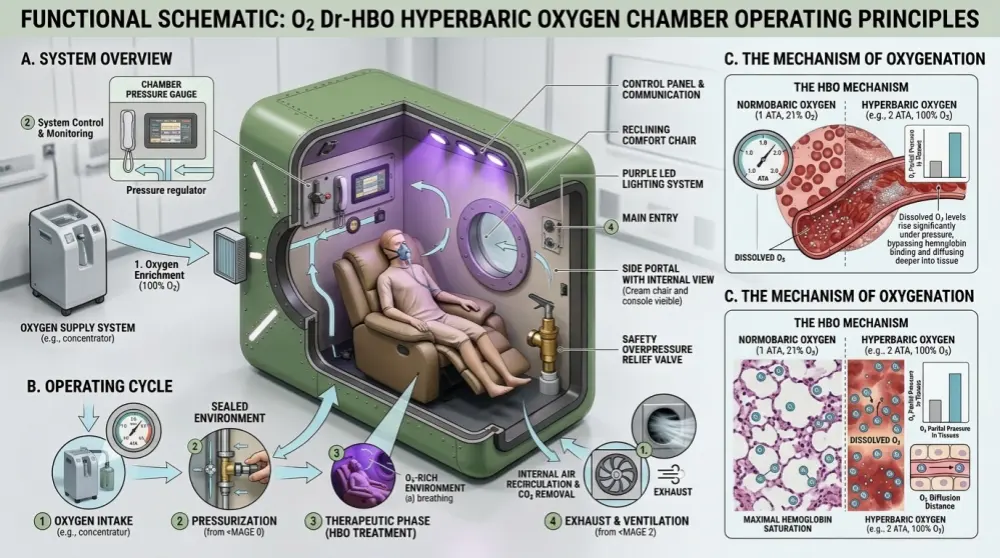
To understand why hyperbaric oxygen therapy works, you need three fundamental physics principles. These aren’t abstract theory — they are the operating logic of every hyperbaric chamber ever built.
Henry’s Law: Oxygen Dissolves Into Your Blood Plasma
Henry’s Law states: The amount of gas that dissolves in a liquid is directly proportional to the partial pressure of that gas above the liquid.
In plain terms: increase the pressure of oxygen, and more oxygen dissolves into your blood.
This is the engine of HBOT. Under normal atmospheric conditions, hemoglobin (the red blood cell protein) carries nearly all the oxygen in your bloodstream — and it reaches maximum capacity at roughly 98% saturation. You cannot carry meaningfully more oxygen through hemoglobin no matter how much pure oxygen you breathe at sea level.
But pressure changes the equation entirely. Inside a hyperbaric chamber at 2.0–3.0 ATA, oxygen bypasses hemoglobin and dissolves directly into the blood plasma — the liquid portion of your blood. This plasma-dissolved oxygen can then reach tissues where blood flow is compromised, red blood cells cannot pass through, or vascular damage blocks delivery.
Clinical data shows HBOT increases plasma-dissolved oxygen up to 20 times over normal baseline levels, raising total oxygen capacity from approximately 16.2 mL O₂/dL to over 23 mL O₂/dL.
Boyle’s Law: Pressure Shrinks Gas Bubbles
Boyle’s Law states: At constant temperature, the pressure and volume of a gas are inversely proportional (P₁V₁ = P₂V₂).
Double the pressure, and a gas bubble halves in volume. At 3.0 ATA, a bubble shrinks to one-third of its original size.
This principle underpins HBOT’s role in treating decompression sickness (“the bends”) and gas embolism — conditions where nitrogen or air bubbles form in the bloodstream. HBOT physically compresses these bubbles while simultaneously flooding the blood with oxygen to accelerate their reabsorption.
Dalton’s Law: Total Pressure Drives Oxygen Deeper
Dalton’s Law states: The total pressure of a gas mixture equals the sum of the partial pressures of each individual gas.
When a hyperbaric chamber increases total atmospheric pressure, it proportionally increases the partial pressure of every gas inside — including oxygen. This creates a steep oxygen concentration gradient between the bloodstream and surrounding tissues, driving oxygen to diffuse deeper and faster into areas of low perfusion.
Together, these three laws explain why HBOT cannot be replicated by simply breathing oxygen through a mask at normal pressure. Pressure is not incidental to the therapy. Pressure is the therapy.
2. How Does HBOT Work? The Physiological Cascade
Once pressure-driven oxygen saturates the plasma and reaches oxygen-deprived tissues, a series of biological cascades begins.
Hyperoxia: Restoring Mitochondrial Function
The immediate effect of HBOT is hyperoxia — an elevation of tissue oxygen levels far above normal. Cells that were operating in “emergency mode” due to oxygen deprivation can now resume normal mitochondrial function, producing ATP (cellular energy) efficiently and initiating repair processes.
The Hyperoxic-Hypoxic Paradox: Triggering Regeneration
One of the most clinically significant discoveries in modern HBOT research is what scientists call the Hyperoxic-Hypoxic Paradox (HHP).
Here is how it works: when oxygen levels are intermittently elevated and then returned to normal across multiple HBOT sessions, the body’s cells detect the shift as a relative oxygen fluctuation. This triggers HIF-1α (Hypoxia-Inducible Factor 1-alpha) — the same regenerative signaling pathway the body uses during actual hypoxia — without the cellular damage that real oxygen deprivation causes.
The downstream effects include:
- Stem cell mobilization: HBOT stimulates nitric oxide release in bone marrow, increasing circulating stem cells by up to eight-fold
- Angiogenesis: Growth factors including VEGF (Vascular Endothelial Growth Factor) stimulate the formation of new blood vessels in ischemic tissue
- Neuroplasticity: Emerging research documents structural changes in white matter tracts and functional brain network improvements, particularly in TBI and PTSD populations
- Telomere elongation: Clinical trials at Shamir Medical Center (Israel) demonstrated over 20% telomere length increase following structured 60-session HBOT protocols
- Senolytic effect: The same protocols showed up to 37% reduction in senescent “zombie” cells that contribute to aging and inflammation
Anti-Inflammatory Action
HBOT modulates the immune response by upregulating anti-inflammatory cytokines (IL-10) while suppressing pro-inflammatory signals (IL-1, IL-6, TNF-α). It also downregulates destructive Matrix Metalloproteinases (specifically MMP-9), which stabilizes the extracellular matrix and accelerates wound closure in chronic non-healing wounds.
3. Types of Hyperbaric Chambers Explained
Not all hyperbaric chambers are equivalent. Chamber design determines whether a system can deliver true clinical HBOT or only a mild wellness-grade approximation.
| Chamber Type | Pressure Range | Oxygen Delivery | Primary Use |
|---|---|---|---|
| Monoplace (Class B) | 1.5–3.0 ATA | 100% medical-grade O₂ | Outpatient clinics, wound care, private wellness |
| Multiplace (Class A) | 1.4–6.0 ATA | Compressed air + O₂ via mask/hood | Hospitals, trauma centers, emergency medicine |
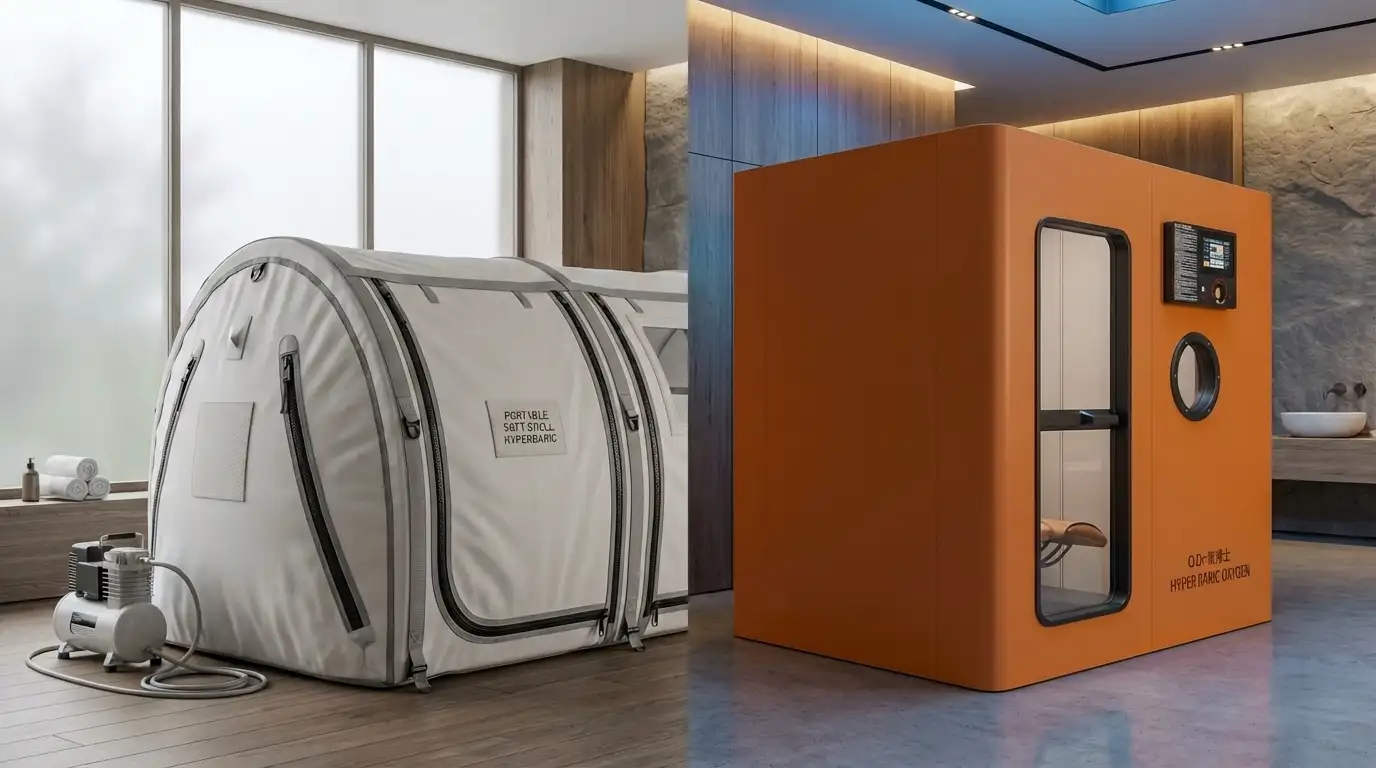
| Mild/Soft-Shell (mHBOT) | 1.3–1.5 ATA | Ambient air or lightly enriched air | General wellness, home use, sports recovery |
Monoplace Chambers
Single-patient, clear acrylic or steel tubes where the entire interior is pressurized with 100% medical-grade oxygen. The patient lies on a sliding bed and breathes the chamber atmosphere directly — no mask required. Monoplace units are the standard for outpatient hyperbaric clinics, wound care centers, and high-end private longevity programs.
Operating pressures of 1.5–3.0 ATA with a weight of 1,500–3,000 lbs and a cyclic life of 10,000–20,000 treatment cycles make these the workhorses of clinical HBOT.
Notable models: Sechrist 3200 (pneumatic control, entertainment system), Perry SIGMA 40 (40.5-inch interior diameter for comfort).
Multiplace Chambers
Walk-in rooms capable of treating 2 to 24+ patients simultaneously, with an internal medical attendant who can provide hands-on care during treatment. The chamber is pressurized with compressed air, and each patient breathes oxygen through a mask or transparent hood. Multiplace systems can reach up to 6.0 ATA for extreme clinical applications.
These units are predominantly hospital-based due to their size (starting around 11,200 lbs), capital cost, and operational complexity. Their advantage is the ability to provide direct medical supervision during treatment — essential for critically ill patients.
Mild / Soft-Shell Chambers (mHBOT)
Inflatable, portable chambers made from polyurethane or canvas. These units reach a maximum of 1.3–1.5 ATA and deliver ambient air (approximately 21–24% oxygen) rather than medical-grade 100% oxygen.
Important distinction: The FDA has cleared soft-shell chambers specifically for acute mountain sickness only. They do not meet the UHMS definition of clinical HBOT. The physiological threshold for treating most approved medical indications — wound healing, osteomyelitis, radiation injury — requires both 100% oxygen delivery and pressure at or above 1.4–2.0 ATA.
Mild chambers can support general wellness, minor recovery, and altitude acclimatization. They are not a substitute for medical-grade treatment when clinical pathology is present.
4. What HBOT Is FDA-Approved to Treat
The FDA recognizes hyperbaric oxygen therapy as an established treatment for 14 specific medical conditions, commonly referred to as “The Standard 14.” Insurance reimbursement through Medicare Part B and most private payers is typically available only for these indications.
| # | FDA-Approved Indication |
|---|---|
| 1 | Air or gas embolism |
| 2 | Carbon monoxide poisoning (with or without cyanide poisoning) |
| 3 | Clostridial myositis and myonecrosis (gas gangrene) |
| 4 | Crush injury, compartment syndrome, and acute traumatic ischemias |
| 5 | Decompression sickness |
| 6 | Arterial insufficiencies (including central retinal artery occlusion) |
| 7 | Severe anemia (exceptional blood loss) |
| 8 | Intracranial abscess |
| 9 | Necrotizing soft tissue infections |
| 10 | Refractory osteomyelitis (chronic bone infection) |
| 11 | Delayed radiation injury (soft tissue and bone necrosis) |
| 12 | Compromised skin grafts and flaps |
| 13 | Acute thermal burns |
| 14 | Idiopathic sudden sensorineural hearing loss |
The Most Common Clinical Applications in Practice
Diabetic foot ulcers (Wagner Grade III and above) represent the single highest-volume clinical application in most hospital hyperbaric programs. These wounds fail to heal because diabetes causes progressive microvascular damage that starves tissue of oxygen. HBOT protocols for diabetic wounds typically involve 30–40 daily sessions at 2.0–2.4 ATA, each lasting 90 minutes.
Radiation-induced tissue injury is the second major driver of clinical volume. The Marx Protocol — 20 pre-operative and 10 post-operative sessions at 2.0–2.4 ATA — is the established standard for patients requiring surgery in previously irradiated tissue, particularly for osteoradionecrosis of the jaw following head and neck cancer treatment.
Carbon monoxide poisoning is one of the clearest emergency applications. HBOT at 2.5–3.0 ATA reduces the half-life of carboxyhemoglobin from 4–6 hours (breathing room air) to approximately 23 minutes, preventing the permanent neurological damage that CO poisoning causes.
5. Clinical vs. Mild HBOT: What’s the Difference?
The market confusion between clinical HBOT and “mild” or “wellness” hyperbaric therapy is one of the most important distinctions a patient or facility operator can understand.
| Factor | Clinical HBOT | Mild HBOT (mHBOT) |
|---|---|---|
| Pressure | 1.4–3.0 ATA | 1.3–1.5 ATA |
| Oxygen | 100% medical-grade | Ambient air (~21%) |
| Chamber type | Hard-shell (rigid vessel) | Soft-shell (inflatable) |
| FDA clearance | 14 approved indications | Acute mountain sickness only |
| Insurance coverage | Medicare/private for approved uses | Generally not covered |
| Clinical evidence | Extensive peer-reviewed data | Limited for medical applications |
| Cost per session | $150–$600 (clinic) | $50–$100 (wellness studio) |
The physiological gap between 1.3 ATA and 2.0 ATA is not a matter of degree — it is a matter of kind. At 1.3 ATA, the partial pressure of oxygen in ambient air is insufficient to achieve the plasma saturation necessary for deep-tissue wound healing, bone infection treatment, or the neuroplasticity protocols studied in peer-reviewed trials.
This does not mean mild chambers have no value. For general wellness, minor recovery support, and altitude preparation, soft-shell systems can provide benefits. But patients seeking HBOT for any condition on the FDA-approved list require clinical-grade equipment — and facilities offering mild chambers for those conditions are operating outside established medical standards.
6. What to Expect During an HBOT Session
Before Your Session
Patients must remove all electronics, metal objects, and any petroleum-based products (lotions, hairsprays, lip balms). The required garment is 100% medical-grade cotton — synthetic fabrics and wool generate static electricity, which creates fire risk in high-oxygen environments. Your blood glucose (if diabetic) will be checked prior to entry.
During Your Session
You will lie on a padded sliding bed inside the chamber. As pressure builds, you will feel fullness in your ears — similar to descending in an airplane. Your treatment team will instruct you on equalization techniques (yawning, swallowing, or the Valsalva maneuver) to equalize middle ear pressure.
Session lengths range from 45 minutes to 5 hours depending on the indication. Most standard clinical protocols run 90 minutes. Many monoplace chambers are equipped with entertainment systems — television, music, or video — to manage the time during multi-hour sessions.
After Your Session
Most patients walk out feeling no different than when they entered. Some report a mild sensation of fatigue following initial sessions as the body adjusts to the elevated oxygen levels. Vision changes (temporary mild nearsightedness) can occur in patients completing long treatment courses — this typically resolves after treatment concludes.
Session Counts by Condition
| Condition | Typical Session Count |
|---|---|
| Carbon monoxide poisoning | 1–3 sessions |
| Decompression sickness | 5–10 sessions |
| Sudden sensorineural hearing loss | 10–20 sessions |
| Compromised skin grafts | 20–30 sessions |
| Radiation tissue injury (Marx Protocol) | 20–30 sessions |
| Diabetic foot ulcers | 30–40 sessions |
| Chronic osteomyelitis | 40–60 sessions |
| Neurological protocols (TBI, Long COVID) | 40–60 sessions |
7. Safety, Side Effects, and Contraindications
Hyperbaric oxygen therapy is considered very safe when performed in properly accredited facilities with trained personnel. Serious adverse events are rare. The most common side effects are minor and manageable.
Common Side Effects
- Middle ear barotrauma: The most frequent complication, occurring in approximately 9.2% of patients. Ear pressure discomfort caused by pressure changes during compression or decompression. Managed through equalization techniques.
- Sinus pressure: Similar mechanism to ear barotrauma; uncommon.
- Temporary vision changes: Mild nearsightedness in 20–40% of patients completing long treatment courses. This reverses after treatment completion.
- Oxygen toxicity: Very rare at standard clinical pressures. Risk increases at pressures above 3.0 ATA and with extended exposure. Symptoms include tingling, tunnel vision, and in extreme cases seizures — which is why clinical sessions include air breaks.
Absolute Contraindications
Untreated pneumothorax (collapsed lung) is the only true absolute contraindication. During decompression, trapped air in the pleural space expands according to Boyle’s Law, creating a tension pneumothorax that can be fatal. A pneumothorax must be treated and confirmed resolved before any hyperbaric treatment.
Relative Contraindications and Drug Interactions
| Contraindication | Reason |
|---|---|
| Pregnancy | Risk of fetal vasoconstriction; only acceptable in life-threatening CO poisoning |
| Severe COPD / emphysema | Risk of air trapping and bleb rupture during decompression |
| Congestive heart failure | Increased cardiac workload under pressure |
| Active fever above 102°F | Lowers seizure threshold; oxygen toxicity risk increases |
| Bleomycin chemotherapy | Synergistic pulmonary toxicity |
| Cisplatin / Doxorubicin | Cardiotoxicity risk in HBOT environment |
| Disulfiram (Antabuse) | Blocks superoxide dismutase; seizure risk |
Safety Standards Governing Clinical Chambers
All clinical hyperbaric chambers are Class II medical devices regulated under 21 CFR 868.5470. Structural integrity is governed by ASME PVHO-1 (Pressure Vessels for Human Occupancy) and fire safety protocols by NFPA 99 Chapter 14 (Health Care Facilities Code). Internal electrical circuits are limited to 28V AC / 0.5A to eliminate ignition risk.
Facilities seeking the highest level of clinical credibility pursue accreditation through the Undersea and Hyperbaric Medical Society (UHMS) — the gold standard that distinguishes hospital-grade care from the broader wellness market.
8. Who Should Consider HBOT?
Patients with FDA-Approved Conditions
If you have been diagnosed with any of the 14 FDA-approved conditions — particularly diabetic foot ulcers, radiation injury, or osteomyelitis — you may be a candidate for covered HBOT. The pathway starts with a specialist referral (podiatrist, wound care physician, oncologist, or otolaryngologist). Medicare Part B covers approved indications with a standard 20% patient co-pay.
Patients Exploring Off-Label Applications
A growing number of patients seek HBOT for conditions that currently fall outside the 14 approved indications: traumatic brain injury (TBI), Long COVID neurological symptoms, PTSD, post-stroke recovery, and longevity protocols. Clinical research in these areas is active and promising, but insurance coverage is generally not available. These treatments are cash-pay, typically ranging from $150–$600 per session at clinical facilities.
Facility Operators and B2B Buyers
Healthcare entrepreneurs, wellness clinic owners, hospitals, and private practices evaluating HBOT as a service line should understand that the ROI calculation differs significantly based on whether the facility operates within Medicare-covered indications (volume-driven, lower margin per session) or the private-pay longevity and neurological recovery market (fewer sessions, higher margin, no payer friction).
9. How Much Does HBOT Cost?
Clinical Session Costs
| Setting | Cost Per Session |
|---|---|
| Hospital-based outpatient center | $200–$1,250 |
| Freestanding accredited clinic | $150–$600 |
| Wellness/longevity studio (off-label) | $150–$400 |
| Mild HBOT wellness studio | $50–$100 |
Medicare Part B covers the full session cost for approved indications, with patients responsible for a standard 20% co-pay. Private insurance coverage varies by plan and indication.
Chamber Acquisition Costs
| Chamber Type | Price Range |
|---|---|
| Soft-shell home chamber | $5,000–$25,000 |
| Monoplace clinical chamber | $50,000–$150,000 |
| Multiplace clinical chamber | $250,000+ |
The Ownership Break-Even Analysis
For patients requiring 40+ sessions for chronic off-label conditions, residential chamber acquisition can offer significant long-term savings. At $450 per clinical session, a home chamber costing $19,999 reaches break-even in approximately 45 sessions. This “Ownership Alternative” is increasingly compelling for patients managing Long COVID, TBI recovery, or chronic neurological conditions requiring extended protocol durations of 60+ sessions.
10. FAQ: HBOT Answered
Q: What is the difference between HBOT and breathing oxygen through a mask?
A: Breathing 100% oxygen through a mask at normal atmospheric pressure cannot increase the oxygen dissolved in blood plasma beyond a marginal amount — hemoglobin is already near saturation. HBOT uses elevated pressure (1.4–3.0 ATA) to force oxygen directly into the plasma, achieving up to 20 times the oxygen concentration achievable at sea level. Pressure is not a delivery mechanism — it is the therapeutic mechanism.
Q: Is hyperbaric oxygen therapy the same as “oxygen therapy”?
A: No. Standard oxygen therapy delivers supplemental oxygen at normal atmospheric pressure and is used to treat acute respiratory conditions. HBOT specifically requires a pressurized vessel and achieves fundamentally different physiological effects through plasma oxygen saturation.
Q: How many sessions does HBOT take?
A: Session counts depend entirely on the condition being treated. Carbon monoxide poisoning may require 1–3 emergency sessions. Chronic diabetic wounds typically require 30–40 sessions. Neurological protocols for TBI or Long COVID may involve 40–60 sessions administered Monday through Friday over several weeks.
Q: What do I wear in a hyperbaric chamber?
A: 100% cotton clothing only — a hospital gown, cotton scrubs, or cotton underwear. Synthetics, wool, and polyester are prohibited because they generate static electricity in high-oxygen environments. All cosmetics, perfumes, hairsprays, and petroleum-based lotions must be removed before treatment.
Q: Can I bring my phone into the chamber?
A: No. All electronics, battery-powered devices, lighters, and metal objects are strictly prohibited inside hyperbaric chambers. The risk of spark or heat generation in a high-oxygen environment presents a serious fire hazard.
Q: Is HBOT covered by Medicare?
A: Medicare Part B covers HBOT for the 14 FDA-approved indications with a standard 20% patient co-pay after the deductible. Off-label applications — including TBI, Long COVID, anti-aging, and sports recovery — are not covered and are paid out of pocket.
Q: Is HBOT safe for elderly patients?
A: With appropriate medical screening, HBOT is generally safe for elderly patients. The most common concern in this population is middle ear equalization, which can be addressed with technique guidance. Relative contraindications — including severe COPD and congestive heart failure — are more prevalent in older populations and require careful pre-treatment evaluation.
Q: What is UHMS accreditation and why does it matter?
A: The Undersea and Hyperbaric Medical Society (UHMS) is the leading professional authority in hyperbaric medicine. UHMS accreditation signals that a facility meets rigorous standards for equipment, clinical protocols, physician training, and patient safety. For patients choosing between providers, UHMS accreditation is the clearest indicator of clinical-grade care versus wellness-only operations.
Q: Can a soft-shell hyperbaric chamber treat my wound?
A: No. Soft-shell chambers operate at 1.3–1.5 ATA and deliver ambient air at approximately 21% oxygen. This pressure and oxygen concentration are insufficient for wound healing, osteomyelitis, radiation injury, or the other FDA-approved clinical indications, which require 1.4–2.4 ATA and 100% medical-grade oxygen. The FDA has cleared soft-shell chambers only for acute mountain sickness.
Q: What is the Hyperoxic-Hypoxic Paradox?
A: The Hyperoxic-Hypoxic Paradox (HHP) is a physiological phenomenon in which repeated cycles of high oxygen exposure (hyperoxia) followed by a return to normal oxygen levels cause cells to activate regenerative signaling pathways — including HIF-1α, stem cell mobilization, and angiogenesis — typically associated with low oxygen stress, but without causing the cellular damage that actual hypoxia produces. This mechanism explains many of HBOT’s regenerative effects beyond simple tissue oxygenation.
Key Takeaways
- HBOT is a medical treatment using 100% oxygen in a pressurized chamber at 1.4–3.0 ATA
- Three gas laws explain how it works: Henry’s (plasma oxygen), Boyle’s (bubble reduction), Dalton’s (pressure gradient)
- The FDA approves HBOT for 14 specific conditions; these are covered by Medicare with 20% co-pay
- Clinical chambers (hard-shell, 2.0+ ATA) are fundamentally different from mild/soft-shell wellness chambers
- Emerging research supports off-label use in TBI, Long COVID, and longevity — but these are cash-pay applications
- UHMS accreditation is the definitive quality signal for clinical hyperbaric facilities
- Safety is well-established; the primary absolute contraindication is untreated pneumothorax
About Our Hyperbaric Chambers
We manufacture and export clinical-grade and wellness-grade hyperbaric oxygen chambers globally, designed to meet international regulatory standards including FDA, CE, and ISO 13485. Our chambers serve hospital wound care programs, private longevity clinics, sports recovery centers, and home wellness applications across more than 30 countries.
Whether you are a healthcare provider evaluating HBOT as a clinical service line, a distributor expanding your medical device portfolio, or a practitioner seeking premium equipment for an integrative wellness program, we offer equipment designed to the engineering and safety standards that clinical credibility demands.
[Request a Quote] | [Download Product Catalog] | [Contact Our Technical Team]
This content is intended for educational purposes and does not constitute medical advice. HBOT should only be administered under the supervision of licensed medical professionals. All clinical claims cited are supported by published peer-reviewed research from institutions including Shamir Medical Center, Tel Aviv University, and Stanford University. For the 14 FDA-approved indications, consult a board-certified hyperbaric physician for evaluation and treatment planning.
References: Undersea and Hyperbaric Medical Society (UHMS) Indications for Hyperbaric Oxygen Therapy; FDA 21 CFR 868.5470; ASME PVHO-1; NFPA 99 Chapter 14; Shamir Medical Center Aging Clinical Trial (Efrati et al.); StatPearls Hyperbaric Oxygen Therapy.