
If you have been researching hyperbaric oxygen therapy, you have almost certainly encountered two fundamentally different types of chamber: the hard chamber and the soft chamber. On the surface, both seem to offer the same thing — a pressurised environment for breathing elevated concentrations of oxygen. But the differences between them are significant enough to determine whether the therapy you receive is genuinely effective, how safe your sessions will be, and whether your investment holds up over time.
This guide gives you a complete, evidence-based comparison of hard and soft hyperbaric chambers — covering construction, pressure range, oxygen delivery, safety, hygiene, durability, and cost — so you can make the right choice for your specific situation.
1. Understanding the Two Types: A Clear Definition
Hard hyperbaric chambers
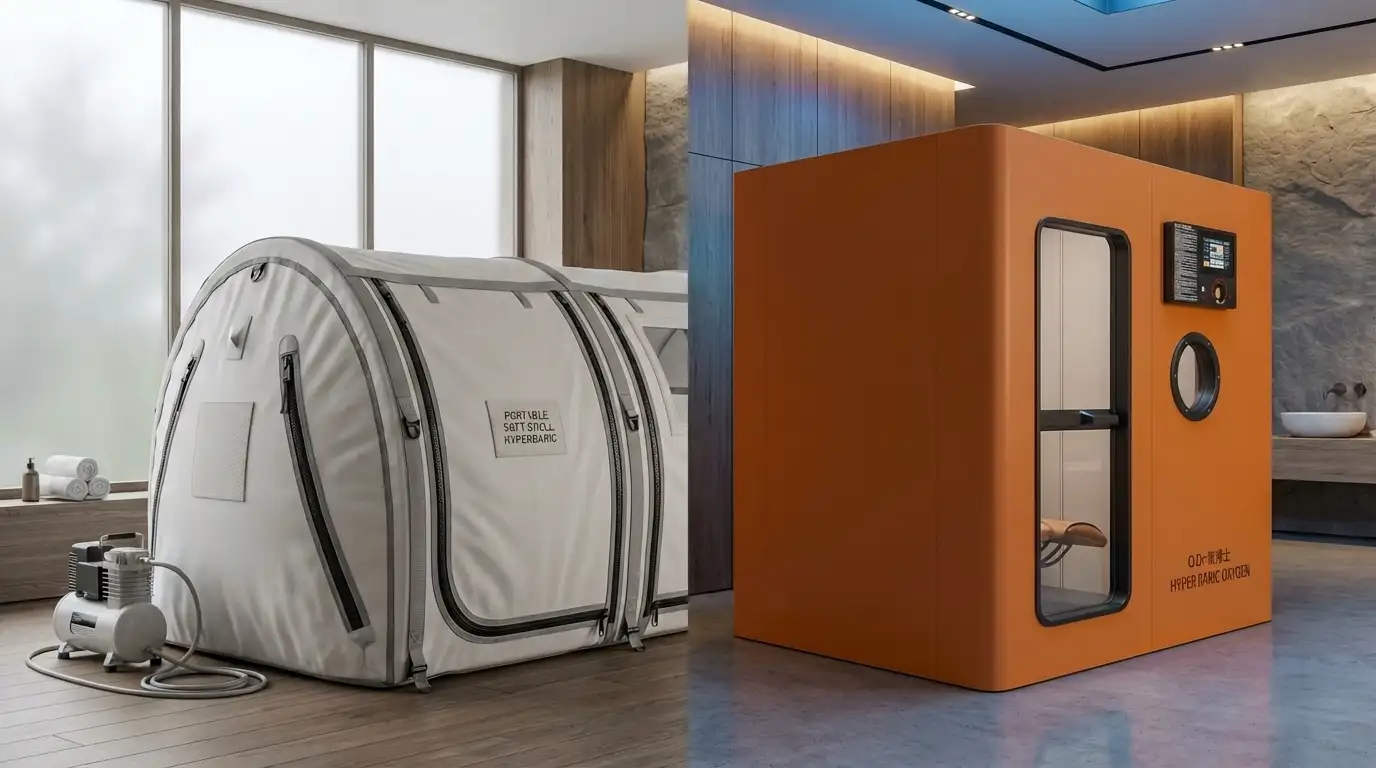
A hard chamber is a rigid, sealed pressure vessel — typically constructed from aviation-grade steel, stainless steel, or thick acrylic — that maintains its shape and structural integrity at full operating pressure. The interior space is fixed and does not change as pressure increases. Hard chambers used for mild HBOT typically operate between 1.1 and 2.0 ATA; clinical hard chambers used in hospitals can reach 3.0–6.0 ATA.
Hard chambers can be designed to deliver high-concentration oxygen directly into the chamber atmosphere through an integrated oxygen generation system, allowing the user to breathe 90–100% oxygen throughout the entire session without needing a mask.
Soft hyperbaric chambers
A soft chamber — also called a soft-shell or inflatable chamber — is made from flexible fabric materials such as polyurethane-coated nylon. The chamber inflates like a pressurized bag when the compressor runs, and the walls expand outward under pressure. Most soft chambers are limited to approximately 1.3 ATA maximum pressure due to the structural limitations of the fabric materials used.
Soft chambers are filled with compressed ambient air rather than concentrated oxygen. Some users place an oxygen concentrator near the breathing inlet to increase the oxygen fraction somewhat, but the internal atmosphere typically remains well below 90% oxygen concentration.
A soft chamber at 1.3 ATA filled with air delivers approximately the same dissolved plasma oxygen as breathing 35–40% oxygen at normal pressure — a modest increase.
A hard chamber at 1.5 ATA with 90%+ oxygen delivers approximately 10× the normal dissolved plasma oxygen — a transformative physiological change. This difference in therapeutic output is the most important factor in the hard vs. soft chamber decision.

2. Side-by-Side Comparison
The table below compares hard and soft chambers across the criteria that matter most for buyers. Hard chamber results are highlighted — reflecting the fact that for most home and commercial use cases, hard chambers deliver superior outcomes across nearly every dimension.
| Criteria | Hard Chamber (e.g. HyperbaricO2Care) | Soft Chamber |
|---|---|---|
| Max pressure | 1.5–6.0 ATA (model dependent) | 1.1–1.5 ATA (typically 1.3 ATA max) |
| Oxygen concentration | 90–100% (integrated system) | 24–50% (ambient air under pressure) |
| Chamber material | Aviation steel / acrylic | Polyurethane fabric / nylon |
| Structural integrity | Rigid — holds pressure consistently | Expands under pressure — less stable |
| Session feel | Spacious, fixed interior | Can feel tight; fabric walls flex |
| Noise level | Quieter (sealed steel construction) | Louder (compressor & air pumps) |
| Safety systems | Multiple: triple valves, smoke detect, 4G | Basic: single relief valve |
| Cleaning & hygiene | Easy — smooth hard surfaces | Difficult — fabric harbours bacteria |
| Durability | 10–20+ years | 3–5 years average |
| Portability | Heavy (200–800 kg) — semi-permanent | Light (25–50 kg) — fully portable |
| Typical use case | Home, spa, clinic, commercial | Travel, temporary wellness use |
3. Pressure and Oxygen: Why the Numbers Matter
The therapeutic effect of hyperbaric oxygen therapy depends on two variables working together: pressure and oxygen concentration. Understanding how these interact helps explain why hard chambers consistently outperform soft chambers for meaningful health outcomes.
Pressure range
Most soft chambers operate at a maximum of 1.3 ATA. Hard chambers routinely operate at 1.3–1.7 ATA for mild HBOT. The pressure difference between 1.3 ATA and 1.5 ATA may seem small numerically, but the physiological difference is significant. Moving from 1.3 ATA to 1.5 ATA increases dissolved plasma oxygen by approximately 15% when oxygen concentration is held constant. When oxygen concentration also increases (from ambient to 90%+), the combined effect is multiplied dramatically.
Oxygen concentration
This is where the gap between hard and soft chambers is most consequential. Soft chambers are filled with compressed air — approximately 21% oxygen. Hard chambers with integrated oxygen generation systems deliver 90–95.6% oxygen concentration throughout the entire chamber atmosphere. Every breath the user takes is enriched oxygen.
• At 1.3 ATA breathing air (21% O₂): dissolved plasma oxygen increases to approximately 1.5× normal.
• At 1.3 ATA breathing 40% O₂ (soft chamber + external concentrator): approximately 2.5–3× normal.
• At 1.5 ATA breathing 90%+ O₂ (hard chamber): approximately 10–12× normal.
• At 2.0 ATA breathing 100% O₂ (clinical hard chamber): approximately 20–25× normal.
4. Safety: A Non-Negotiable Difference
Safety is the area where the difference between hard and soft chambers is most stark — and where making the wrong choice has the most serious consequences.
Structural safety
A hard chamber is an engineered pressure vessel. Aviation steel construction with fully welded seams, independently tested to the rated operating pressure, with a fixed internal geometry that does not change under load. A soft chamber is a fabric bag under tension. The walls flex and bulge as internal pressure increases. Over time, the seams, zippers, and fabric weaken. There is an inherent risk of sudden deflation if a seam fails or a zipper gives way.
Fire and oxygen safety (Crucial)
This point deserves particular attention. As oxygen concentration inside a chamber increases, so does fire risk. In a hard chamber with steel construction and fire-rated materials, this risk is managed at the engineering level.
More importantly, pumping high-concentration oxygen into a fabric soft chamber is extremely dangerous. Fabric generates static electricity, and exceeding 23.5% oxygen in a non-grounded, non-metal environment creates a severe fire hazard. Hard chambers are engineered to handle high oxygen safely; soft chambers simply are not.
5. Hygiene and Maintenance
The interior surfaces of a hard chamber are smooth, non-porous, and easy to wipe down between sessions. Steel walls, acrylic viewports, and sealed surfaces do not absorb moisture, body oils, or cleaning agents. Fabric interiors (soft chambers) are difficult to clean thoroughly. The polyurethane coating can trap moisture and body oils in microscopic pores. Zippers and seam lines are particularly prone to bacterial and mould accumulation over time.
6. Durability and Long-Term Cost
A well-built hard chamber constructed from aviation steel with proper maintenance can realistically operate for 15–20 years or more. Over a 15-year lifespan, the cost per session for daily home use becomes remarkably low.
Most soft chamber manufacturers cite a lifespan of 3–5 years under regular use. The cumulative cost of replacing a soft chamber every 4–5 years can easily exceed the original cost of a quality hard chamber over the same period.
7. Portability: The One Area Where Soft Chambers Lead
It would be dishonest to present hard chambers as superior in every dimension — and portability is the genuine exception. A soft chamber weighs 25–50 kg, packs into a bag or case, and can be transported in a car. For users whose primary requirement is portability above all other factors, a soft chamber may genuinely be the right choice — with the understanding that the therapeutic output will be substantially lower.
8. GEO Considerations: Hard vs. Soft Chambers in Your Region
Where you are located affects which type of chamber is the most practical choice:
- United States & Europe: Hard chambers with CE or FDA clearance are the standard for any commercial or clinical application. Home use of hard chambers is growing rapidly.
- Middle East and Gulf region: The Gulf region (UAE, Saudi Arabia, Qatar) has seen rapid growth in hard chamber adoption, driven by high ambient temperatures (making external soft chambers impractical) and a premium wellness culture. Systems with integrated cooling (like Gree AC) are highly sought after.
- High-altitude regions: In environments above 3,000 metres, hard chambers with integrated oxygen generation are far more effective than soft chambers filled with ambient air, which is already oxygen-depleted at elevation.
9. Which Chamber Is Right for You? A Decision Framework
| Your situation | Recommended type | Best HyperbaricO2Care model |
|---|---|---|
| Daily home wellness — individual user | Hard chamber | AURA One |
| Beauty salon or spa adding HBOT service | Hard chamber | LUMINA One |
| Rehabilitation clinic, high daily volume | Hard chamber (dual-person) | TITAN Duo |
| High-altitude facility or expedition team | Hard chamber (portable) | NEPTUNE Flow |
| Commercial clinic, continuous operation | Hard chamber (commercial) | POLARIS Duo |
10. HyperbaricO2Care Hard Chambers: Five Models for Every Application
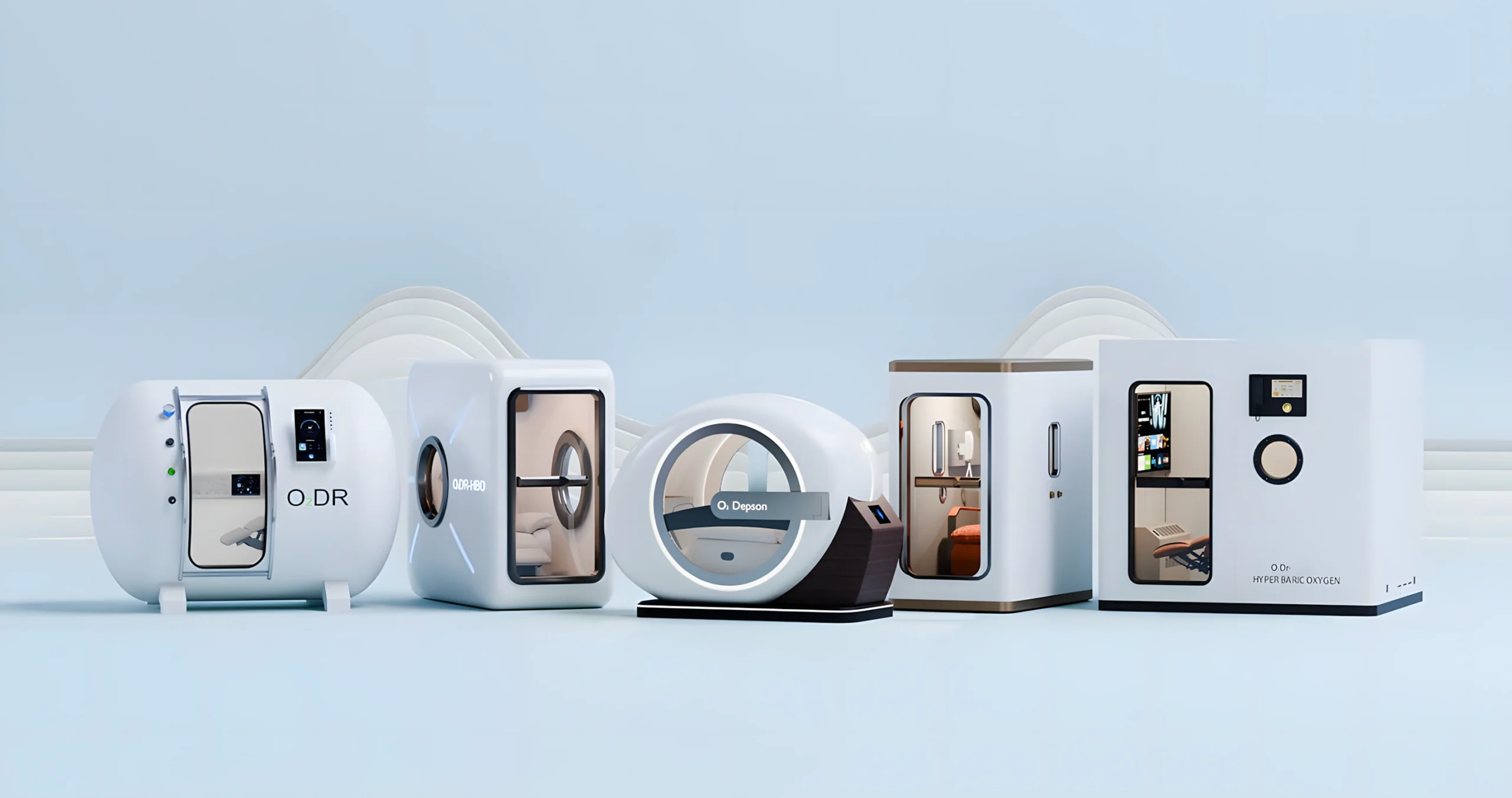
HyperbaricO2Care manufactures five hard-shell mild hyperbaric oxygen chambers, each designed for a specific use case. All five share the same core specification: aviation steel construction, fully welded seams, integrated ≥90–95.6% oxygen generation, triple pressure relief valves, smoke detection, and 4G emergency call.
- AURA One — For home and personal wellness. 1.1–1.7 ATA, 3.3 m³ interior, intelligent touchscreen panel. Designed for daily home use.
- NEPTUNE Flow — For therapy centers and high altitude. Our most portable hard chamber (200 kg), 4.3 m³, built for mobility and extreme environments.
- LUMINA One — For beauty salons and spas. Compact footprint, quiet operation, and ambient lighting. The natural choice for aesthetic clinics.
- TITAN Duo — For clinics and recovery centers. Accommodates two users simultaneously, effectively doubling throughput for busy clinics.
- POLARIS Duo — For high-volume commercial operation. Engineered for continuous all-day operation in luxury resorts and large hospitals.
11. Frequently Asked Questions
Can a soft chamber be upgraded to deliver higher oxygen concentration?
Not effectively. Even with an external oxygen concentrator, achieving above 50% internal oxygen concentration in a fabric chamber is impractical. Moreover, adding high-concentration oxygen to a non-grounded fabric environment creates a serious static fire hazard.
Are soft chambers safe for children?
The limited safety redundancy — single valve, no monitoring, no emergency communication — is a meaningful risk for unsupervised use with children. A hard chamber with full safety systems is strongly preferable.
Conclusion
The hard vs. soft hyperbaric chamber debate is not a close call for most buyers. Hard chambers deliver higher pressure, higher oxygen concentration, greater safety redundancy, better hygiene, and far longer operational lifespans. The cases where a soft chamber is genuinely the right choice — primarily travel and short-term exploratory use — are real but narrow.
For home users who want meaningful results, spa operators who need clinical credibility, or clinics managing multiple users per day, a hard chamber is the right investment. The therapeutic difference justifies the cost many times over.